CURRENT FIELD OF STUDY
ARROYO GRANDE, CA.
SITUATED BETWEEN PISMO BEACH AND SAN LOUIS OBISPO
ARROYO GRANDE HISTORY - 1 https://visitarroyogrande.org/peek-into-a-g-s-history-at-local-museums/
ARROYO GRANDE HISTORY - 2 https://www.worshipweekly.com/history.html
Indigenous and Early Colonial Era
- The Chumash: For centuries, the fertile Arroyo Grande Valley was home to the northern Chumash Indians, who thrived as skilled hunters and gatherers.
- European Arrival: Spanish explorer Juan Rodríguez Cabrillo made initial contact in 1542, eventually leading to the establishment of the Spanish mission system in the region.
The Rancho Era
- Mexican Land Grants: Following Mexico's independence from Spain, the region was divided into large tracts of land called ranchos.
- Francis Ziba Branch: In 1837, the Mexican government granted the 16,000-acre Rancho Santa Manuela to Francis Ziba Branch, who settled there and became a prominent cattle rancher.
-
Township and Agriculture
- The Settlement: A devastating severe drought in the mid-1860s decimated the cattle population, forcing Branch and other large ranch owners to subdivide and sell off parcels. This spurred a wave of new settlers and the establishment of Arroyo Grande Township by the county board of supervisors in 1862.
- Branch Street: The town's main thoroughfare was named after Branch, who laid out the early streets.
- The Swinging Bridge: To connect portions of land divided by the Arroyo Grande Creek, the Short family built a suspension bridge in 1875. Spanning 171 feet, it is still maintained by the city and remains the only one of its kind in California.
- Agricultural Boom: The construction of railroads in the 1880s and 1890s aided economic expansion, allowing Arroyo Grande to become a major commercial hub for crops like strawberries, lettuce, and flowers.
-
Incorporation and Modern Growth
- Incorporation: The town was officially founded in 1897 and incorporated as a city in 1911, seeing significant growth through the 20th century.
- The Village: Today, the downtown corridor is affectionately known as "The Village" and features numerous restored Victorian buildings
____________________________________________________
ARROYO GRANDE, CA.
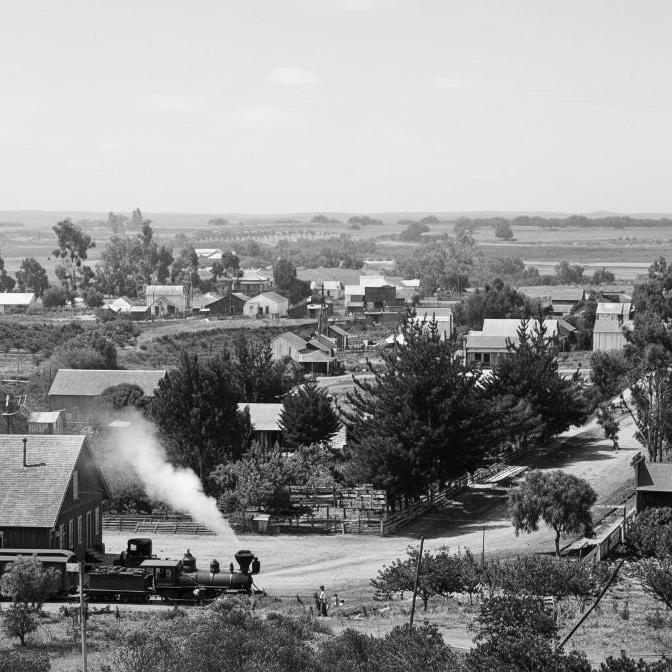
KON TIKI - 1951
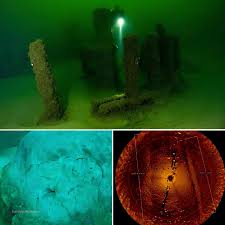
3000 YEAR OLD CHINESE ANCHORS FOUND OFF OF THE CALIFORNIA COAST
The theory of 3,000-year-old Chinese anchors being found off the coast of California is
a pseudoscientific claim that has been thoroughly discredited by historians and scientists. While stone anchors were discovered near the Palos Verdes Peninsula in the 1970s, subsequent research has shown they are not ancient Chinese artifacts.
Here is a summary of the facts and the prevailing scientific conclusion:
* The initial theory: In 1976, two divers discovered donut-shaped rocks with holes in them off the coast of California. Some people, including a few archaeologists at the time, speculated that these could be ballast stones or anchors from an ancient Chinese shipwreck dating as far back as 2,000 to 3,000 years. This fueled a sensational—but incorrect—narrative that Chinese sailors had discovered the Americas millennia before Columbus.
* Scientific refutation: Further investigation by geologists, oceanographers, and historians in the 1980s revealed that the rocks were not ancient Chinese anchors.
*. 19th-century fishing: Researchers found that Chinese fishermen in California during the late 19th and early 20th centuries used stone anchors of a similar type for their redwood junks and sampans.
*. Natural rock formations: Scientists found geological evidence that many of the rocks were not manufactured, but were naturally formed artifacts. Ocean erosion of fossil-rich cliffs would leave rocks with holes and depressions, which wave action could further shape over time.
*. Evidence of a hoax: Some scientists even suggested the discovery may have been a hoax, though definitive proof was lacking.
*. A discredited theory: The idea of ancient Chinese anchors has been widely dismissed by experts.
- The stones found were too small to anchor large ocean-going ships.
- There is no other archaeological or written evidence to support the idea of ancient Chinese maritime voyages to the Americas.
- Similar discredited claims include the 1421 theory by Gavin Menzies, which was based on fabricated evidence and has also been debunked by historians worldwide.
-
The discovery of the stone anchors generated interest and media coverage in the 1970s and 1980s, but it was a historical curiosity, not conclusive proof of an ancient Chinese presence in California.
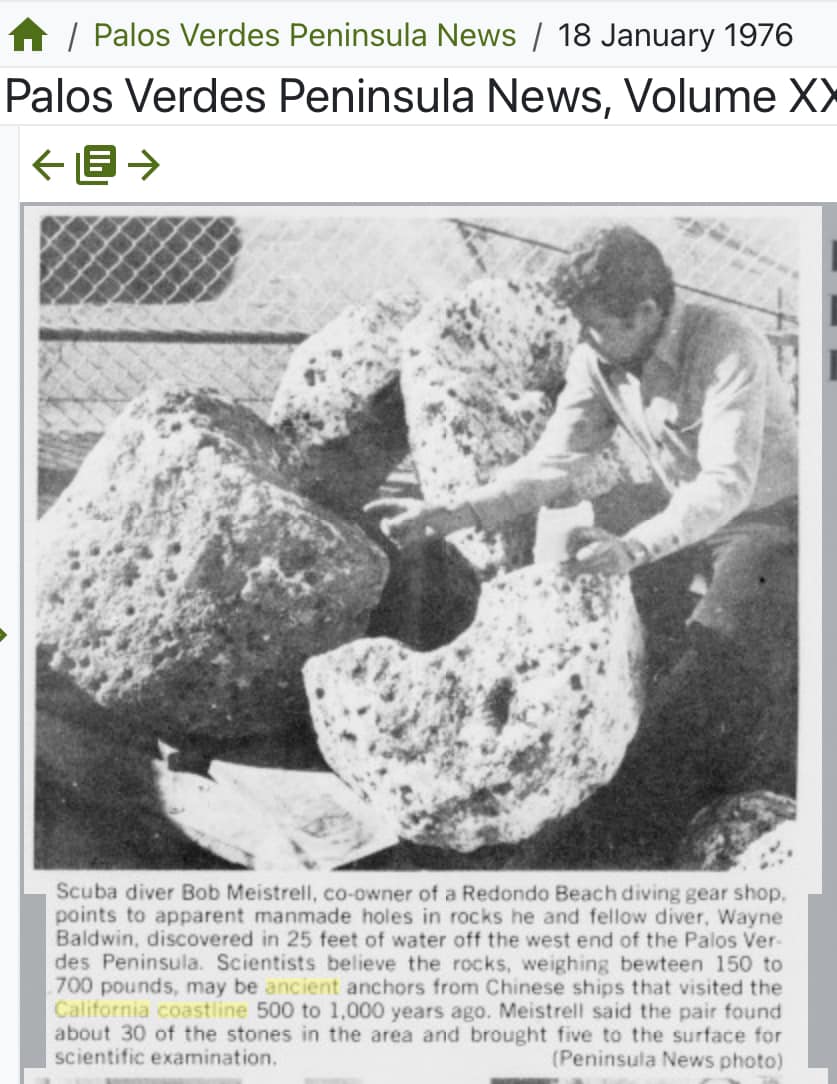
Palos Verdes Peninsula News, January 18, 1976
“Scuba diver Bob Miesstell, points to apparent man made holes in rocks he and a fellow diver discovered in 25 feet of water off the west end of the Palos Verdes peninsula. Scientists believe the rocks, weighing between 150 and 700 pounds may be ancient anchors from Chinese ships that visited the California coastline 500 to 1,00O years ago. Meistrell said he found about thirty of the stones in the area and brought five to the surface for scientific examination.”
________________________________________
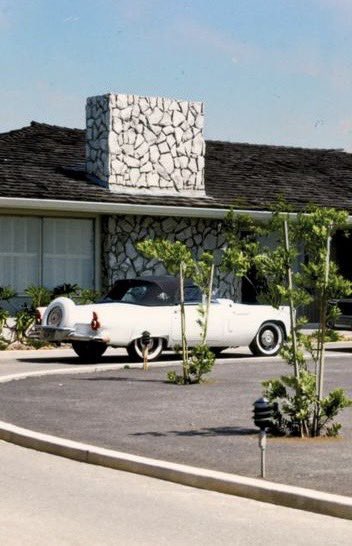
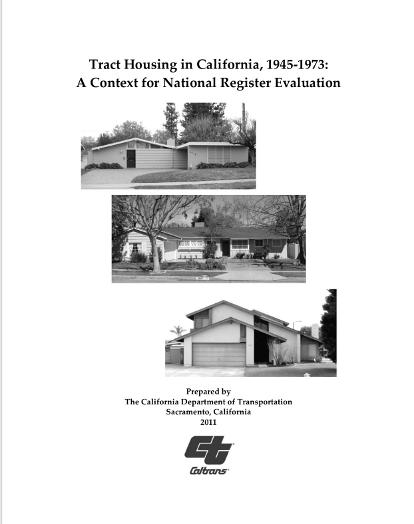
OVERVIEW OF THE REPORT
This report isn't a simple historical narrative; it's a technical document created to help Caltrans staff and consultants evaluate the historical significance of post-World War II tract housing for transportation projects.
The purpose of the report is to provide a framework for determining if a particular tract housing development or individual house from this period is eligible for listing on the National Register of Historic Places. This is a crucial step in the environmental review process for any state-funded project, as federal and state laws require the consideration of potential impacts on historic properties.
The report is divided into two parts:
-
Historical Context: This section provides a broad overview of the factors that led to the post-war housing boom in California, including population growth, suburbanization, residential segregation, and the influence of the Cold War. It explains the historical significance of these housing developments beyond their architectural style.
-
Design and Evaluation: This part focuses on the physical characteristics of tract housing. It details the design features of houses and subdivisions from 1945 to 1973, identifying what makes them historically significant. The goal is to help professionals identify and document common housing types of the era, which are often overlooked in traditional historical studies.
SOUTHERN CALIFORNIA RESIDENTIAL HOUSING 1945 - 1973
Pertaining to both the Pacific Palisades area of Los Angeles and the community of Altadena, CA.
The wildfires that swept through Los Angeles in January 2025were devastating, and unfortunately, many of the very homes we were just discussing—the mid-century tract and ranch-style houses—were in the path of destruction.
According to reports, the two largest fires, the Palisades Fire and the Eaton Fire, destroyed over 18,000 homes and structures. Many of these were in communities like Pacific Palisades and Altadena, which are known for their beautiful, older homes, including many from the mid-20th century. It's a tragic loss not only for the people who lived in them but also for the architectural and historical fabric of Los Angeles.
This event highlights a critical issue in California: the wildland-urban interface. As the suburbs expanded over the decades, they pushed further into areas that are naturally prone to wildfires. The very homes that were built to fulfill the "American Dream" are now incredibly vulnerable to the new reality of more frequent and intense fire seasons, fueled by climate change and other factors.
The loss of these homes serves as a stark reminder of the challenges of living in a beautiful but fire-prone state. It underscores the importance of:
-
Fire-safe building codes: Modern homes are built with materials that are more resistant to fire, but older homes often lack these protections.
-
Land-use planning: There is a growing debate about how and where to build new homes, especially in high-risk areas.
-
Historic preservation: We must consider how to protect the historical character of our communities while also making them more resilient to natural disasters.
The destruction of these homes is a painful chapter in the history of California's housing and land use, bringing the past and present into a difficult and tragic collision.
CALIFORNIA TRACK HOUSING 1945 - 1973
Understanding the history of California tract housing from 1945 to 1973 is important for several reasons. This period saw a dramatic and rapid transformation of the state's landscape and society, with long-lasting impacts still felt today.
The Housing Boom and Suburbanization
The era following World War II saw an immense population surge in California, driven by returning veterans and a growing aerospace and defense industry. Tract housing was the solution to the immense demand for affordable, single-family homes. The assembly-line construction methods, pioneered by developers like the Levitt brothers, allowed for the rapid and inexpensive creation of entire neighborhoods. This led to the widespread development of suburbs, fundamentally reshaping the state's physical and social geography. Studying this history helps us understand the origins of California's sprawling suburbs and their impact on transportation (e.g., freeway development), land use, and community design.
Social and Economic Consequences
The development of tract housing had profound social and economic effects. While it provided an opportunity for many families to achieve the "American Dream" of homeownership, it was not an equal opportunity. Discriminatory practiceslike racial covenants and "redlining" were common, which barred or restricted people of color from buying homes in these new developments. This created segregated communities and contributed to the wealth gap that persists today. By examining this history, we can better understand the root causes of urban and suburban segregation and the systemic inequalities in housing and wealth distribution.
Architectural and Cultural Legacy
The tract homes of this period, particularly the Ranch and Contemporary styles, became iconic symbols of California's mid-century aesthetic. These homes, with their open floor plans, attached garages, and indoor-outdoor living spaces, reflected a new, casual lifestyle. Understanding their history helps us appreciate the architectural legacy of the era and how it influenced American culture, from television shows and movies to modern-day home design. This knowledge is also crucial for historic preservation, allowing us to identify and protect significant examples of this common, yet historically important, type of architecture.
EARLY HISTORY OF TOWER RECORDS SINCE 1941
ACTOR BURT LANCASTER's ART COLLECTION
There isn't extensive public information specifically detailing the contents and locations of Burt Lancaster's personal art collection. However, some sources do confirm that he was an art collector:
One documentary describes him as an "art-collector liberal-activist," highlighting this aspect of his life alongside his acting career.
While a full inventory isn't readily available, it's mentioned that:
- Lancaster's former home, a Spanish-style condo at Century Towers, was on the market in 2016, and was described as containing a vast art collection, though details about individual works are not listed.
- Some art institutions, such as the Art Institute of Chicago, hold works related to Burt Lancaster, primarily photographs and portraits of the actor himself, rather than pieces from his private collection.
We here at the project are active in learning more about Burt Lancaster's art collection, consider:
- Searching auction records: His estate may have included art that was auctioned off after his passing. Checking the archives of reputable auction houses could reveal details about specific pieces. You can find information about auction houses that deal with fine art and collectibles online, such as Clark's Fine Art & Auctioneers Inc.
- Investigating his philanthropic activities: As a liberal activist, Burt Lancaster may have supported arts organizations or made donations to museums during his lifetime. Looking into such records could offer insights into his taste and involvement in the art world.
- Currently examining biographies and personal accounts: Biographies or articles about Burt Lancaster's life may offer more details about his personal interests, including his art collecting habits.
- Donations and Auctions:
- Lancaster's estate donated eleven Henry Moore sculptures and maquettes to the Los Angeles County Museum of Art (LACMA). These pieces were later auctioned off.
- Lancaster's artistic interests:
- Burt Lancaster was also an artist, specializing in Gyotaku, the Japanese art of making fish prints on rice paper. He was an award-winning Gyotaku artist. His work focused on expressing colors, textures, and compositions to capture the beauty of nature and encourage appreciation for aquatic life
- (Artist of Gyotaku Not Confirmed)
- Gyotaku is the Japanese art of making fish prints on delicate rice paper. The art reproduces the exact features and characteristices of each induvidual fish. "Gyo" translates to fish and "taku" translates to stone rubbing which refers here to fish rubbing. It began in Japan or China in the early 1800's as a means of measuring and recording a fisherman's catch. (See Photo Below)
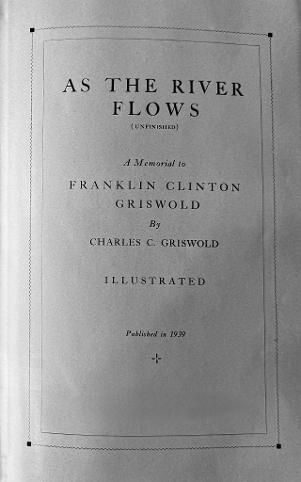
AS THE RIVER FLOWS - by CHARLES C. GRISWOLD -1939
- Griswold family genealogy: The Griswold family is well-documented in genealogical records, with individuals like Edward Griswold and Matthew Griswold being prominent figures in early American history. There are various publications on the Griswold family, such as "The Griswold family, England-America," which traces the family's history from England to America.
- England connection: The Griswold name itself has English origins, with a connection to Griswolds Farm in Snitterfield, Warwickshire. Early Griswold immigrants to the American colonies, such as Edward Griswold, came from England.
- Publications related to Griswold family history: The search results mention several books and resources related to Griswold family history, including publications by the Griswold Family Association. Some of these books focus on specific generations of the family.
-
Based on the provided information,
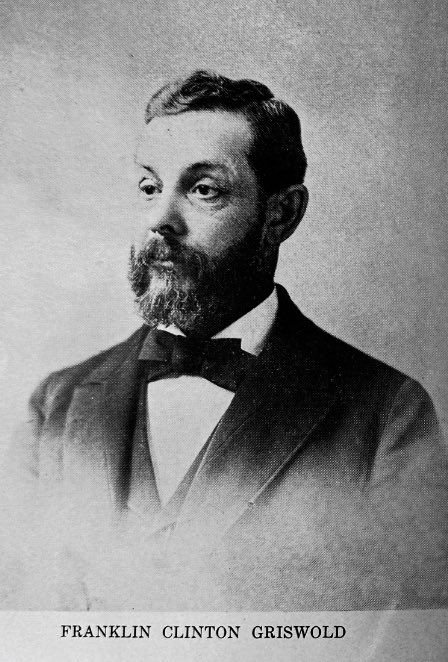
Franklin Clinton Griswold (1838-1921) was an individual who served in the Union Army during the American Civil War.
Here's what is known about his military service:
- He enlisted on October 6, 1862, as a Sergeant in G Co. MN 1st Mounted Rangers and was mustered out on November 28, 1863.
- He re-enlisted on January 5, 1864, as a 2nd Lieutenant in M Co. MN 2nd Cavalry and was mustered out on December 4, 1865.
There's also a mention that he was an attorney who owned land in Minneapolis, and his son, Franklin Wolcott Griswold, was the founder of the Griswold Signal Company.
Griswoldville, CT:
- Griswoldville was a locality within Wethersfield, Connecticut, that existed for several centuries.
- It had a history tied to its founding families, religious life, industry (like the Griswoldville Manufacturing Company), and even its own firehouse.
The Griswold Train Signal:
- The Griswold Signal Company, based in Minneapolis, Minnesota, manufactured traffic signals and railway crossing signals.
- It was founded by Franklin Wolcott Griswold, the son of Franklin Clinton Griswold.
- The company introduced the unique rotating banner signal in 1927, which included a stop sign that would rotate to face traffic when a train approached.
- These signals were once common in the Midwest but have become rare, with only a few still operating in Minnesota as of 2016.
Connection:
Franklin Clinton Griswold, whose military service was previously mentioned, was the father of Franklin Wolcott Griswold, the founder of the Griswold Signal Company. While there's evidence of the Griswold family in Weathersfield, Connecticut (Griswoldville), the provided information doesn't directly link Franklin Clinton or his son, Franklin Wolcott Griswold, to that particular location in Connecticut. The Griswold Signal Company was based in Minneapolis, Minnesota, where Franklin Wolcott Griswold was a native.
-
ADDITIONAL: One source mentions that Humphrey Bogart was a distant cousin, a cousin2x removed Frank Gray Griswold. Sources suggest that Donald Trump is distantly related to several celebrities including Humphrey Bogart.
Franklin Clinton Griswold was the father of Donald George Griswold, the founder of Cla-Val Co.
Here is what the information reveals about Franklin Clinton Griswold:
- Father of Donald George Griswold: He is listed as Donald George Griswold's father.
- Birth and Death: Franklin Clinton Griswold was born in 1838 and died in 1921.
- Wife: He was married to Ella Weir (Hall) Griswold.
- Other Children: He was the father of Franklin Wolcott "Frank" Griswold, founder of the Griswold Signal Company, who was one of his 13 children. This indicates Franklin Clinton Griswold had a large family.
- Occupation and Location: He was an attorney who owned a lot of land on Nicollet Island in Minneapolis, Minnesota.
- Military Service: He served in the military during the Dakota Conflict and the Civil War, including time in the Cullen Guards, the 1st Regiment Mounted Rangers, and the 2d Regiment Minnesota Cavalry (Company M).
- Ancestry: He was the son of Franklin Wolcott Griswold and Emily (Adams) Griswold.
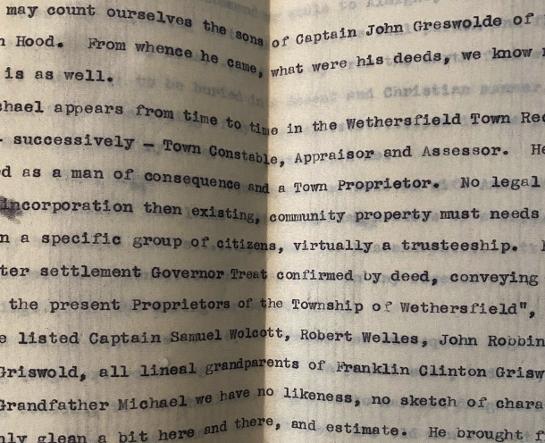
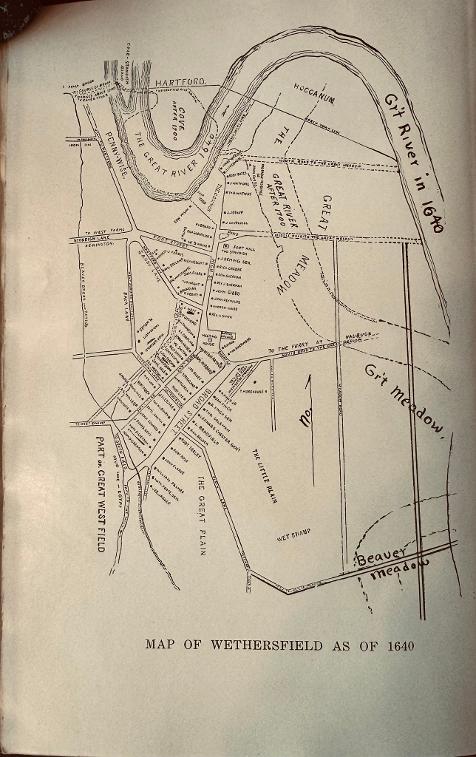
So, Franklin Clinton Griswold was an attorney and military man in Minneapolis who was the father of at least two notable inventors and businessmen: Franklin Wolcott Griswold (Griswold Signal Company) and Donald George Griswold (Cla-Val Co.). Photos and Weathersfield map below.
ALBERT EINSTEIN's INTEREST IN CHRISTIAN SCIENCE
Albert Einstein did attend Christian Science churches and reading rooms on multiple occasions.
Here's what the information indicates about his interactions with Christian Science:
- Attended Wednesday meetings: Late in his life, Einstein reportedly attended Wednesday noonday meetings of a Christian Science church in New York City. He was also seen at Wednesday evening meetings of the Christian Science church in Princeton, New Jersey, where he resided.
- Visited Reading Rooms: He was known to frequent Christian Science reading rooms in both New York City and Princeton. One attendant in Princeton described him as a frequent visitor who spent considerable time reading Science and Health, the foundational text of Christian Science.
- Positive comments about Christian Science: Einstein made remarks to a Christian Science Reading Room attendant about Science and Health, suggesting a positive impression of the book. He also responded favorably to Christian Scientists, with one anecdote reporting him saying, "Do you people realize what a wonderful thing you have?" after a church service.
- Relationship with Christian Scientist: Einstein had a friendly relationship with William Hermanns, a Christian Scientist and German history authority who had fled Nazi Germany. They discussed spirituality and science, with Einstein acknowledging that "thoughts influence the body".
- Possible influence of family: His son, Hans Albert, and his family lived in Greenville, South Carolina, where Hans Albert became a Christian Scientist under the influence of his wife. Albert Einstein visited them frequently, and this exposure may have provided him with motive and opportunity to learn more about the faith.

EARLY YEARS OF THE TOWER RECORDS MUSIC STORE / TOWER VIDEO
Tower Record Mart in Sacramento, CA. existed before December 7th, 1941
(photo - USS ARIZONA)
Russ Solomon began selling used jukebox records from his father's Tower Drug store in the Tower Theatre building on Broadway in Sacramento in 1941. This initial record-selling operation eventually expanded into the Tower Record Mart.
Russ Solomon reopened his business and created a second location named Tower North, financed by his father. Around this time, he rebranded Tower Record Mart to Tower Records and introduced a new logo with a red and yellow color scheme similar to Shell Oil Company. This marked the transition of the business from a small record-selling operation within a drugstore to a more formally established and branded retail chain.
Tower Records in the United States closed its retail stores in 2006.
_____________________________________
*In other words as the USS Arizona took part in military drills with the Pacific Fleet, back in Sacramento Russ Solomon began doing business as Tower Record Mart in 1941, based in the back of his father’s drugstore in the Tower Theatre building on Broadway Street.
The Annie Pfeiffer Chapel at Florida Southern College Frank Lloyd Wright March 1941
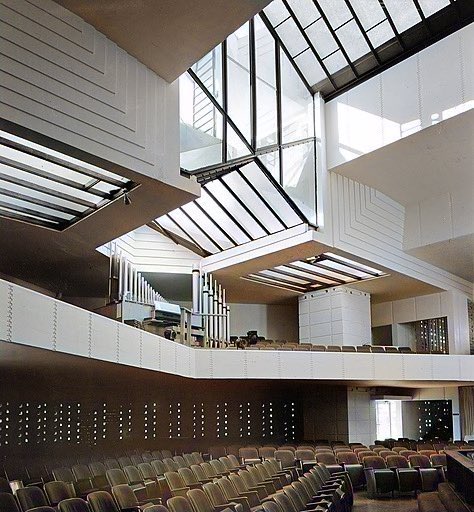

BURT LANCASTER
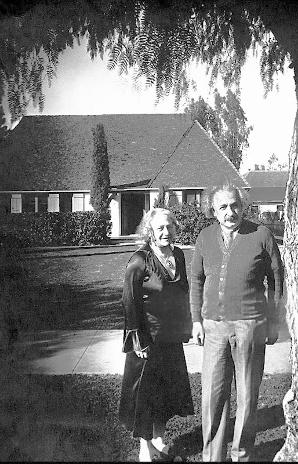
AT THEIR HOME IN PASADENA, CALIFORNIA 1930s. -2nd photo 2025
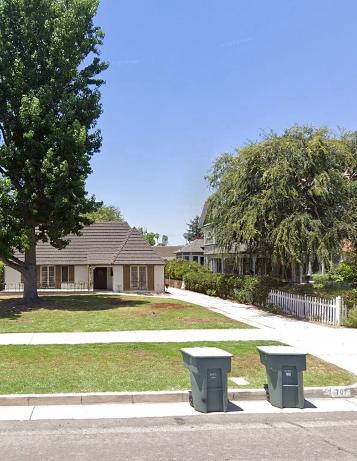

AN ITEM OF INTEREST REGARDING QUEEN ELIZABETH II
While Queen Elizabeth II's deep devotion to the Anglican faith is well-documented, there's no evidence suggesting she "publicly" embraced Christian Science. She was known to many family members and friends for her strong support of Christian Science.
However some sources suggest there are connections between the British Royal Family and the Christian Science movement, primarily in earlier periods. To be noted Prime Minister Winston Churchill was a reader of the Christian Science Monitor.
.
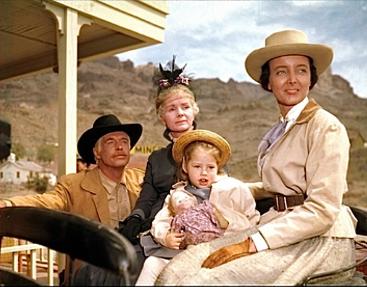
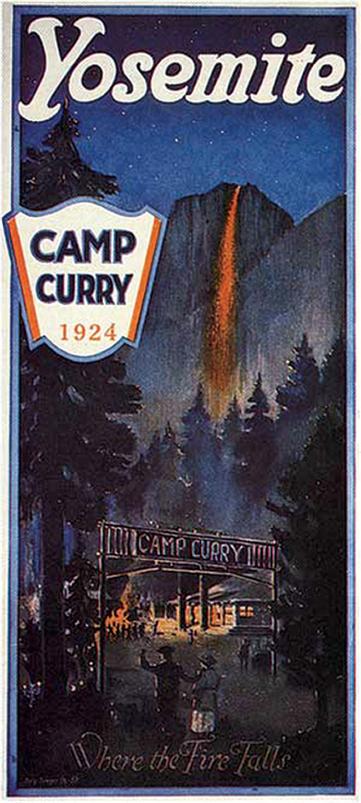
The Firefall at Yosemite National Park is a famous and awe-inspiring event that took place annually from the 1870s through the 1960s, with its most iconic period occurring in the 1930s. It was a dramatic natural spectacle that blended human ingenuity with the breathtaking beauty of Yosemite Valley. Here’s an overview of its history and significance:
History of the Firefall
The Firefall was originally conceived as a grand spectacle in the 1870s, created by the management of the Ahwahnee Hotel (formerly known as the Yosemite Hotel), which was a luxurious lodge built within Yosemite Valley.
-
Origins (1872):
The idea began in the late 1800s as a way to entertain guests at the hotel. To create the effect of a "falling fire," logs were set ablaze at the top of Glacier Point, a 3,000-foot-high cliff that overlooks Yosemite Valley. After dark, the logs were pushed over the edge, creating a fiery cascade that appeared to be flowing like a waterfall. -
Development (1920s-1930s):
By the 1920s and 1930s, the Firefall had become a regular event. Each night, firewood was prepared, and the logs were pushed over Glacier Point. The sight of the flaming logs tumbling down into the valley below was breathtaking, particularly in the twilight hours, and it became a celebrated event, attracting crowds of tourists who were eager to witness the spectacle. -
1930s:
The 1930s was the high point of the Firefall's popularity. Yosemite had become a major tourist destination by this time, drawing thousands of visitors. The Firefall was particularly popular with photographers, artists, and tourists, as it combined the dramatic natural landscape of Yosemite with the extraordinary visual effect of fire in the night sky. -
End of the Firefall (1968):
The event continued to be staged for nearly a century. However, in 1968, the National Park Service decided to end the Firefall due to concerns about the environmental impact. The practice of burning logs at the top of Glacier Point was deemed unsafe, and it was also considered disrespectful to the park's natural resources. The last Firefall was staged that year, and since then, Yosemite National Park has forbidden the event, focusing more on preserving the park's natural beauty.
The Importance of the Firefall
-
Cultural Significance:
The Firefall became a symbol of Yosemite’s allure and a unique spectacle that drew attention to the park’s natural wonders. It merged human creativity with the majesty of the natural world, creating an experience that was both artistic and awe-inspiring. Visitors to Yosemite came not only to see its iconic landmarks like El Capitan and Half Dome but also to witness the Firefall, which was a rare and magical moment in time. -
Tourism and Economic Impact:
The Firefall was an important tourist attraction that contributed significantly to the economic development of Yosemite National Park. It helped solidify Yosemite as one of America's most iconic national parks. The event drew people from all over the world, increasing hotel bookings and guiding services, which boosted the local economy. -
Artistic Inspiration:
The Firefall inspired countless artists, photographers, and writers, who sought to capture its fleeting beauty. The fiery cascade against the backdrop of Yosemite's granite cliffs became a symbol of the wilderness and the power of nature. For photographers, it was an opportunity to capture an ephemeral moment where nature and human creativity merged in an extraordinary visual display. -
Environmental and Preservation Concerns:
Though the Firefall was beloved, its impact on the natural environment and wildlife became more of a concern over time. The large-scale fires at Glacier Point were not without their consequences, and the event's cessation in 1968 reflected growing environmental awareness and a desire to protect Yosemite’s integrity as a pristine natural environment. -
Legacy:
Today, the Firefall lives on in the collective memory of those who witnessed it, as well as in the photographs and stories that continue to circulate. Interestingly, a modern version of the "Firefall" takes place every February at Horsetail Fall, where, under the right conditions, the setting sun can create the illusion of a glowing, fiery waterfall, similar to the old spectacle. Though it's a natural phenomenon, many still refer to it as "Yosemite Firefall."
Conclusion
The Firefall at Yosemite in the 1930s represents a unique chapter in the park's history. It was a combination of human creativity, the beauty of Yosemite, and the development of tourism in national parks. Though it is no longer part of Yosemite’s tradition, it remains a powerful reminder of the ways in which people have interacted with and celebrated nature, as well as a testament to the enduring wonder of one of America’s most iconic natural landscapes.
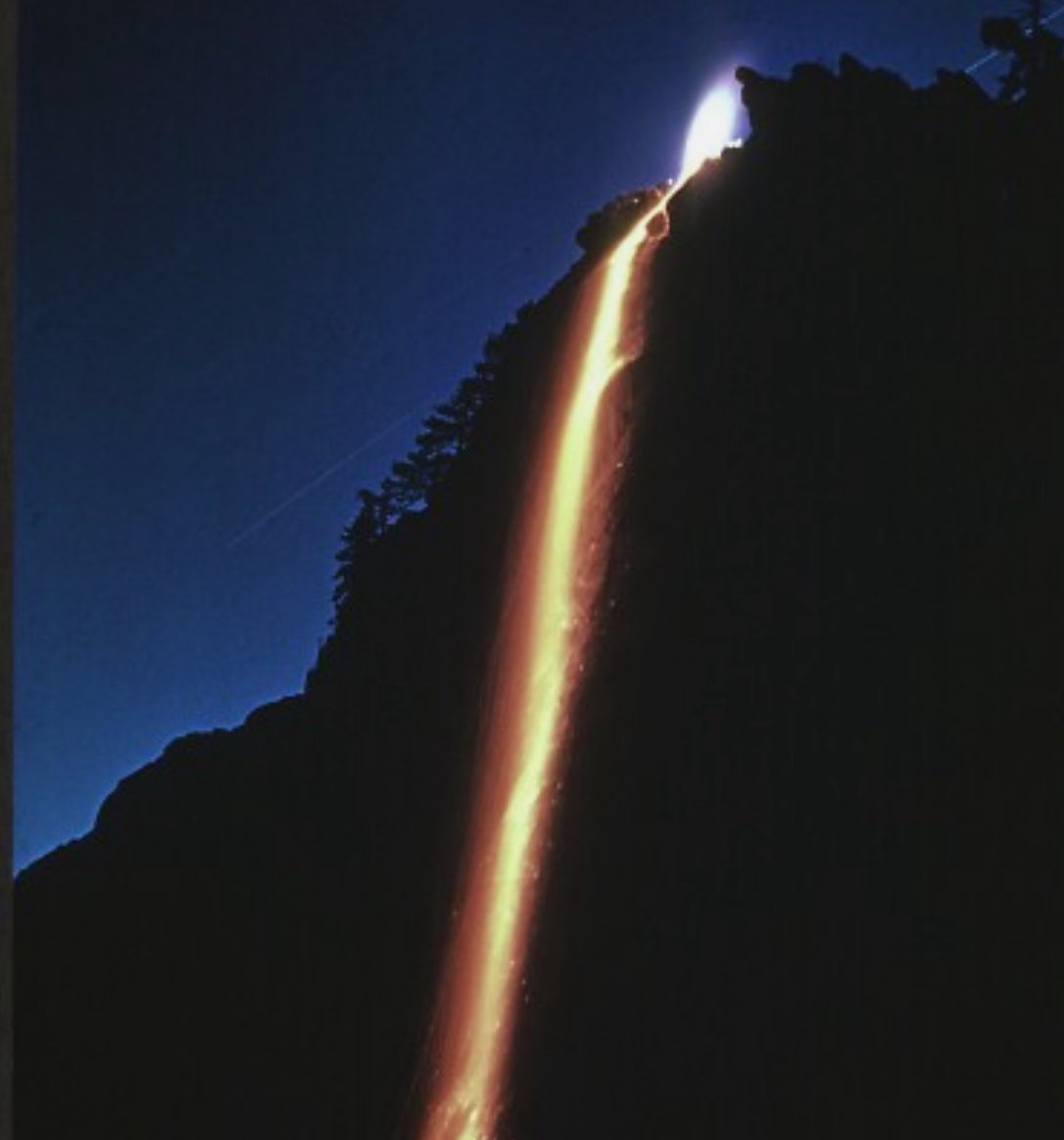
THE FIREFALL AT YOSEMITE NATIONAL PARK 1950
Filoli is a sprawling 654-acre estate and National Historic Landmark in Woodside, California, about 25 miles south of San Francisco. Originally built in 1917 as a private residence, it opened to the public in 1975 and is now a site of the National Trust for Historic Preservation and a 501(c)(3) non-profit organization.
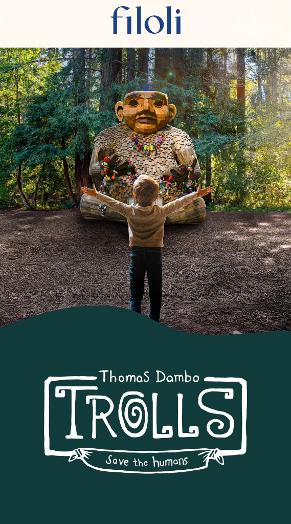
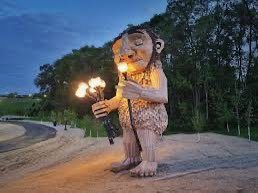
The Thomas Dambo troll exhibits in California hold significant value for the community in several ways:
- Environmental awareness and sustainability: Dambo's trolls, constructed from reclaimed wood and other recycled materials, serve as a tangible reminder of the importance of reusing and repurposing waste. They are placed in natural settings to encourage people to explore and appreciate the environment, fostering a connection to nature that inspires conservation efforts.
- Community engagement and connection: Building the trolls involves local volunteers, creating a shared experience and fostering a sense of ownership and pride within the community. The whimsical and fantastical nature of the sculptures also invites interaction and encourages people to explore their surroundings and engage with the artwork in unique ways.
- Cultural enrichment and artistic expression: The trolls, inspired by Scandinavian folklore, bring a touch of global culture to California communities. As public art, they create spaces for dialogue, reflection, and appreciation of artistic expression, enriching the cultural landscape of the area.
- Economic benefits and tourism: The installations, such as the troll at the California Nature Art Museum in Solvang, are expected to be major attractions, drawing visitors and generating economic activity for the local community. The California Nature Art Museum notes that the troll will connect their museum to Danish culture in Solvang, and will put Solvang and the Santa Ynez Valley on the "Trollmap" for troll hunters, according to the museum.
- Promoting positive change: Each troll installation is accompanied by a unique story that subtly highlights the need for humans to make better choices regarding the environment and their connection to it. These narratives can inspire individuals to adopt more sustainable practices and become advocates for environmental protection.
-
In essence, the Thomas Dambo troll exhibits in California contribute to a more environmentally conscious, engaged, and culturally enriched community, while also providing economic benefits through tourism.
-
Promoting imagination and creativity
- The monumental scale and fantastical nature of the troll sculptures immediately capture children's attention and spark their imaginations.
- Children can invent stories about the trolls, their lives in the forest, and the adventures they have, fostering imaginative play and creative thinking.
- The whimsy of the trolls can inspire children to create their own art using recycled materials, or even to invent their own fantastical creatures and stories, according to the South Coast Botanic Garden.
-
Fostering a connection to nature
- The trolls are often placed in natural settings like forests and gardens, encouraging children to explore these spaces and develop an appreciation for the natural world.
- The "Trolls: Save the Humans" exhibit, for instance, aims to reconnect humans to nature through the story of six young trolls, South Coast Botanical Garden.
- As children search for the trolls, they engage with their surroundings and learn about local flora and fauna, developing a deeper understanding of ecosystems and the importance of conservation.
-
Teaching about sustainability and recycling
- The trolls, built from recycled materials like scrap wood and damaged pallets, provide a tangible example of how waste can be repurposed and given new life.
- The stories that accompany the trolls often highlight the need for humans to make better choices regarding the environment, including recycling and reducing waste.
- This teaches children that discarded materials can be transformed into something beautiful and impactful, inspiring them to be more environmentally conscious and to adopt sustainable practices in their daily lives, according to the South Coast Botanic Garden.
-
Encouraging exploration and outdoor activity
- The pursuit of finding the trolls encourages children to be active and explore the outdoor spaces where the sculptures are located.
- This promotes physical activity and can reduce screen time, offering a healthier and more engaging alternative for leisure and learning, according to Filoli.
- The element of discovery and the sense of adventure in finding the trolls can be particularly motivating for children, transforming a visit to a park or garden into an exciting treasure hunt, via Filoli.
In essence, the Thomas Dambo troll exhibits in California are valuable to children because they offer a unique blend of fun, learning, and environmental awareness. They provide opportunities for children to ignite their imaginations, connect with nature, learn about sustainability, and engage in active exploration, all while creating lasting memories.
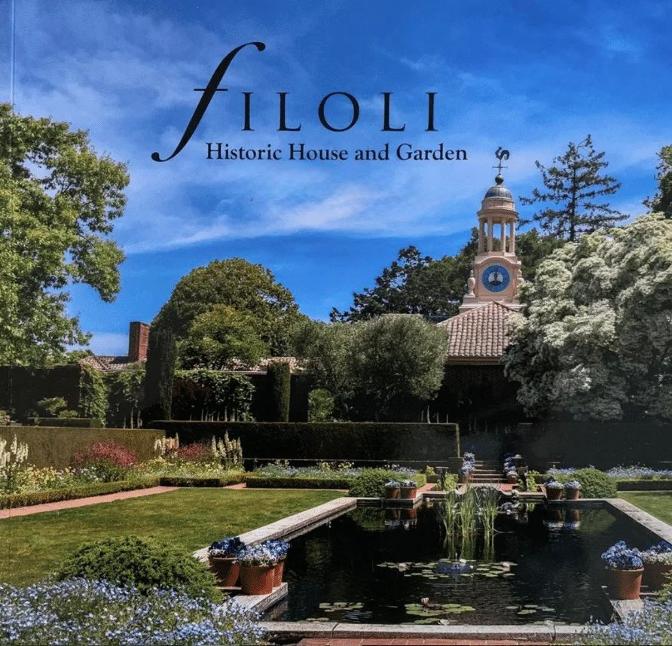
Filoli is a vibrant landscape of the Bay Area, situated on the unceded ancestral lands of the Ramaytush Ohlone, in Woodside, California. The estate boasts 654 acres of beauty nestled along the slopes of California’s coastal range. Originally built as a private residence in 1917, Filoli was opened to the public in 1975 as a 501(c)(3) nonprofit organization and site of the National Trust for Historic Preservation. The property is considered one of the finest remaining country estates of the 20th century, featuring a 54,000+ square-foot Georgian revival-style mansion, 16 acres of exquisite English Renaissance gardens, a 6.8-acre Gentleman’s Orchard, and hundreds of acres of Natural Lands with 6 distinct ecosystems and nature trails. Filoli is dedicated to connecting our rich history with a vibrant future through beauty, nature and shared stories, so that one day all people will honor nature, value unique experiences, and appreciate beauty in everyday life.
"I have always felt that such a place should be preserved ...and made a center of horticulture and cultural activities".
-Lurline Roth, 1975, on donating Filoli to the National Trust for Historic Preservation.
Filoli is a stunning historic estate nestled in Woodside, California, about 30 miles south of San Francisco
. It's widely regarded as one of the finest remaining country estates of the 20th century.
Here's a breakdown of what makes Filoli special:
History and setting
- Originally built between 1915 and 1917 for William Bowers Bourn II, a prominent businessman, and his wife Agnes Moody Bourn, it served as their country estate.
- The name "Filoli" is an acronym of Bourn's personal credo: "FIght for a just cause; LOve your fellow man; LIve a good life".
- The estate was later purchased by the Roth family and eventually donated to the National Trust for Historic Preservation in 1975, according to the National Trust for Historic Preservation.
- It's situated on 654 acres of land, according to the National Trust for Historic Preservation including formal gardens, natural lands with various ecosystems, and a Gentlemen's Orchard.
- Georgian Revival-style Mansion: A 54,000+ square-foot mansion with 56 rooms, says Visit California featuring libraries, a ballroom, drawing rooms, and more.
- Formal Gardens: 16 acres of exquisite English Renaissance gardens, showcasing a variety of blooms throughout the year, according to Filoli.
- Natural Lands: Hundreds of acres of natural lands with 5 distinct ecosystems, including redwood forests, chaparral, and cultivated grasslands.
- Gentleman's Orchard: A 6.8-acre orchard with over 650 fruit trees, including rare and lost varieties.
- Estate Trail: A one-mile trail (now known as The California Trail) that allows visitors to explore the natural lands, passing through a horse pasture, native plant fields, and a bridge over the San Andreas Fault.
- Lamchin Interpretive Center: A former barn transformed into a center that honors the ancestral lands of the Ramaytush Ohlone people.
- Thomas Dambo Trolls: Currently hosting the "Trolls: Save the Humans" exhibit featuring six large-scale troll sculptures crafted from recycled materials, placed along the Natural Lands Trail.
- Café and Shop: Filoli features the Quail Café with local and seasonal fare, along with shops selling gifts and Filoli-grown products.
-
Mission and values
- Filoli's mission is to connect its rich history with a vibrant future through beauty, nature, and shared stories.
- Their core values include integrity, inclusivity, welcoming, innovation, collaboration, and stewardship.
- They are also committed to diversity and inclusivity, engaging with a DEAI (Diversity, Equity, Accessibility, and Inclusion) Task Force and ensuring representation in their staff and board.
- Filoli is open to the public daily, offering self-guided tours, guided experiences, and a variety of special events throughout the year.
- You can visit to see the seasonal blooms in the gardens, explore the mansion, hike the trails, and currently, seek out the Thomas Dambo trolls.
- It's a vibrant landscape that offers a blend of history, natural beauty, and engaging activities for all ages.
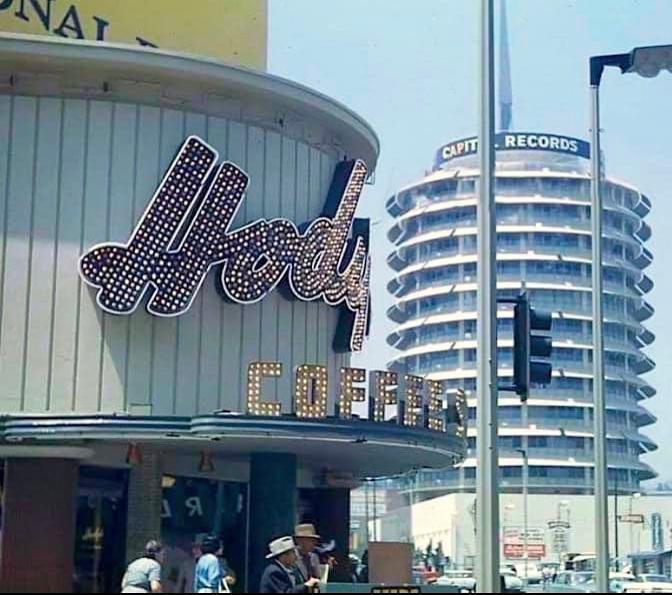
HODY'S of HOLLYWOOD
- Location: The most famous Hody's of Hollywood was located on the northwest corner of Hollywood and Vine.
- Time Period: Hody's occupied this prime location from 1955 to 1969. Before that, the site housed a Melody Lane (from 1940) and the CoCo Tree Café (from 1932).
- Owner: The chain was owned by Sidney Hoedemaker, and the name "Hody's" is likely derived from his last name,
- Family Restaurant: Hody's was known as a family restaurant, offering a variety of food items and catering to a wide range of customers.
- Clown Motif: The Hollywood and Vine location notably featured a large clown face on its signage and even on its children's menus, according to Pamela Greyson's Lost Los Angeles.
- What it is now: The site of the former Hody's at Hollywood and Vine is currently a parking lot.
Hody's of Hollywood is a significant part of the area's history, representing the mid-century era of family-friendly dining in a bustling, iconic location.

416 MOVIES - 324 GB AND GROWING
This library is preserving our cultural heritage. So much has been lost and there are so many needs for a library such as this. Douglas and Pamela Zacayo have given so much of themselves to preservation of community in which this library reaches out too. Douglas's film work and Pamela's values to reaching through various platforms gives the community such a strength in bond and natural way.
- Films are powerful cultural artifacts that reflect the society, beliefs, and values of the era in which they were created.
- Film archives safeguard these cinematic treasures, providing future generations with a window into the past and helping us understand the evolution of societal values and cultural norms.
- Without preservation efforts, a significant portion of film history, including silent films, documentaries, and independent productions, would be lost due to deterioration and lack of resources.
- By preserving films from diverse cultures and communities, archives promote cross-cultural understanding and appreciation, highlighting the richness of global cinematic heritage.
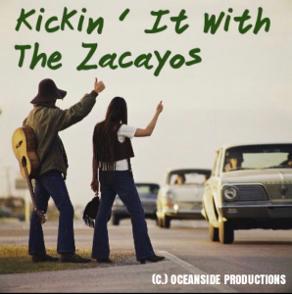
NEW SEASON COMING UP FOR THE PODCAST
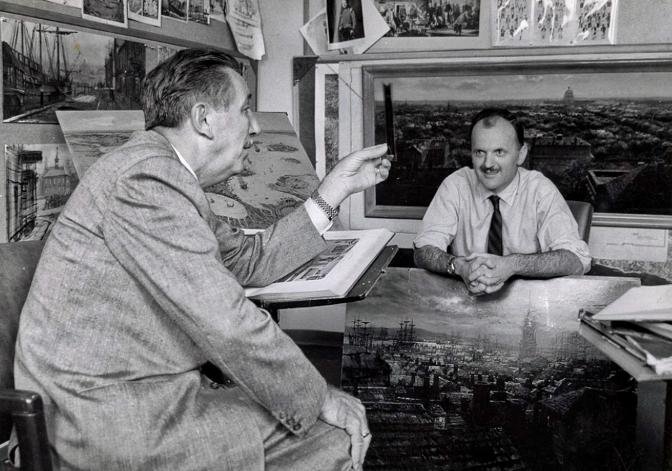
Peter Ellenshaw (1913-2007) was an accomplished English artist and a pivotal figure in the world of cinematic special effects, particularly recognized for his groundbreaking matte paintings for Disney films.
...to be continued
ART THROUGH THE AGES - Seventh Edition
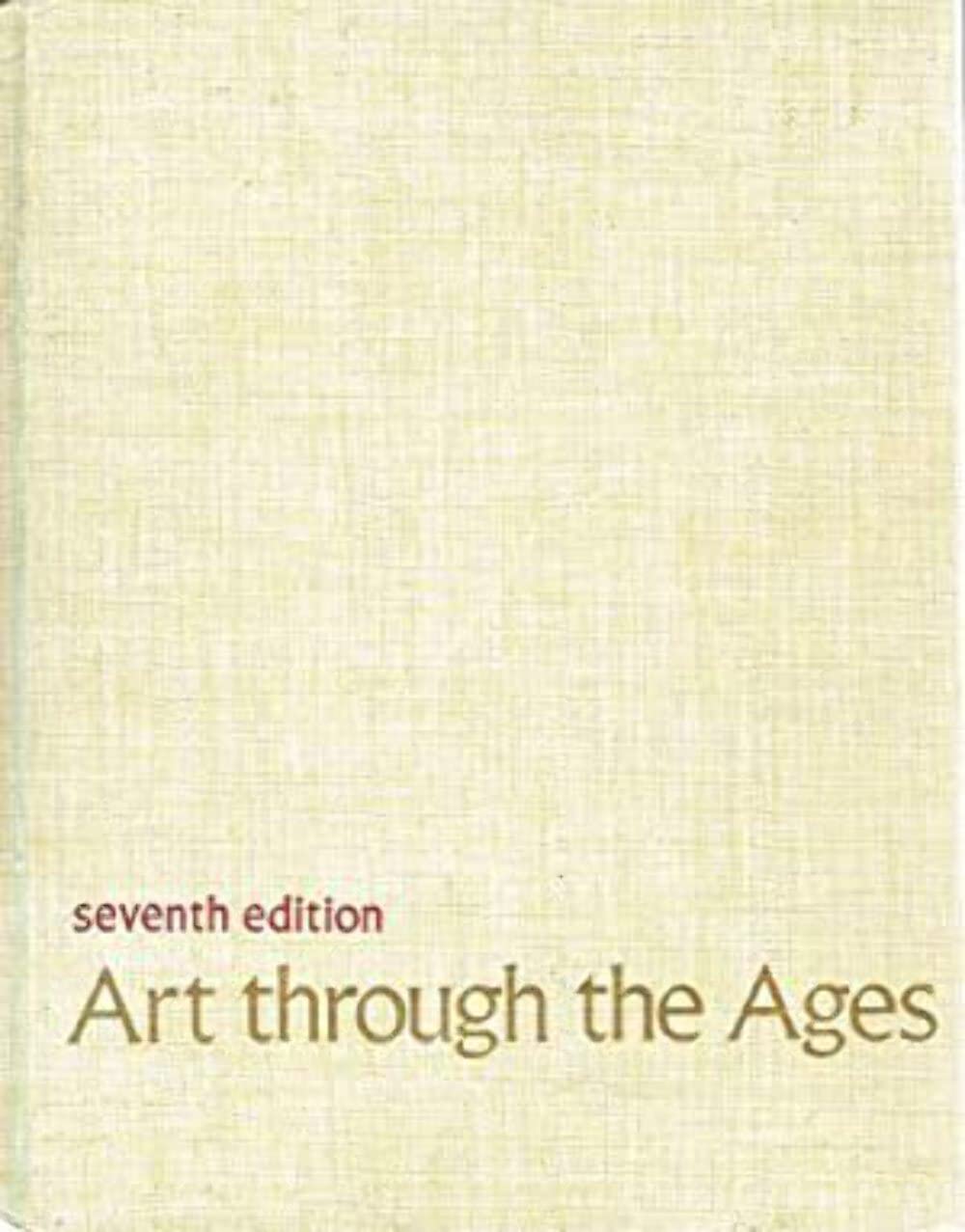
Gardner's Art Through the Ages
is a well-known art history textbook, and the 7th edition was published in 1980 by Harcourt Brace Jovanovich. It was authored by Horst De Lacroix and Richard G. Tansey, building upon the original work of Helen Gardner.
Key features of this edition:
- It's a comprehensive textbook offering an in-depth exploration of ancient, medieval, and non-European art.
- It covers the history of art by exploring various artists and their works.
- This edition introduced the term "non-European art" to its readers.
- It shifted away from drawing direct comparisons between art from different parts of the world, opting for a more chronological and regional presentation.
- It includes over 500 color and over 700 black and white illustrations.
AVAILABLE AT INTERNET ARCHIVE

The documentary series "Art of the Western World" explores 2,500 years of Western art history, covering movements and masterpieces from Ancient Greece to the late 1980s
.
Here's some information about the documentary series:
- Presented by Michael Wood: Historian Michael Wood leads the audience on an engaging journey through various art periods.
- Comprehensive Coverage: The series explores a panorama of Western art, including architecture, painting, and sculpture, providing historical and cultural context for each piece.
- Nine Episodes: The series consists of nine main episodes (originally eighteen half-hour episodes).
- Expert Commentary: Along with Wood's insights, the series includes commentary from other historians and scholars, adding depth and different perspectives to the content.
- Filmed on Location: The production travelled to over 150 locations in 8 countries to capture the art and architecture in its original setting.
Episodes
The nine main episodes explore the following periods and movements: (Season 2)
- The Classical Ideal: Traces the origins of Western art to ancient Greece and Rome.
- A White Garment of Churches: Focuses on Romanesque and Gothic churches and the influence of monasticism and pilgrimage.
- The Early Renaissance in Italy and the North: Examines the Italian Renaissance and the unique artistic developments in Northern Europe.
- The High Renaissance: Showcases the work of artists like Da Vinci, Michelangelo, and Raphael.
- Realms of Light: The Baroque: Explores the dramatic style of the Baroque period, including artists like Bernini and Caravaggio.
- An Age of Reason, an Age of Passion: Covers the Rococo, Neoclassicism, and Romanticism art movements.
- Realists, Impressionists, Post-Impressionists: Contrasts Realism with the innovations of Impressionism and Post-Impressionism.
- Into the Twentieth Century: Examines the Fauves, Cubists, and Surrealists, among other movements.
- In Our Own Time: Explores the Post-War period, including Abstract Expressionism and Post-Modernism, and the internationalization of the art world. ------The series aims to demonstrate how Western art reflects the culture, history, and social changes of the eras in which it was created. While the series is comprehensive and well-regarded, some viewers find the production values to be somewhat dated.
____________________________
BULLOCK's FASHION SQUARE - OPEN AIR MALL, SHERMAN OAKS, CALIFORNIA
Footage Circa 1964 - "Bullock's Rare"
Severely damaged from the Northridge Earthquake of 1994 the entire mall was refurbished as an indoor mall. It was renamed as the Westfield Fashion Square.
Key facts about Bullock's Fashion Square in 1964:
- It was originally an outdoor mall.
- It opened on April 22, 1962.
- It was anchored by Bullock's and I. Magnin department stores.
Other details from 1964:
- A fashion show called "Cruise a la Mode" was held at Fashion Court in Sherman Oaks, with a public presentation at 7 p.m. at all 35 stores in the center.
- Someone who worked at the Encino Tea Room at that location in 1964 fondly remembers the Bullock's mens shop and Sy Devore.
- They also recall Bullock's being their favorite store, and the Jolly Rogers restaurant being a favorite place to eat.
(We have obtained a "Hard Copy" of the content in addition to furnishing a copy to Internet Achieve.)
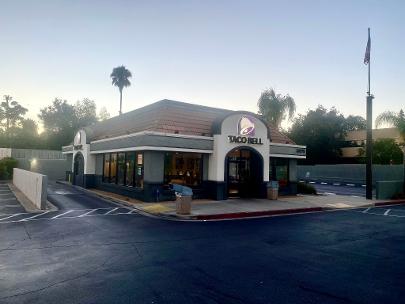
A TOCO BELL's PAST - WOODLAND HILLS - CALABASAS
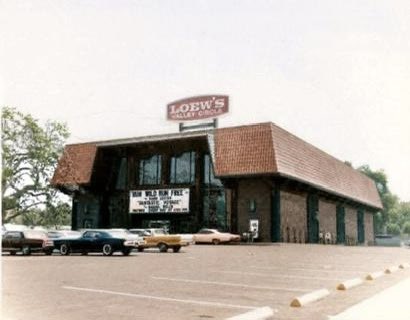
THEATER IS NOW THE LOCATION OF THE TACO BELL AT EL CAMINO MALL IN WOODLAND HILLS ON MULLHOLLAND HIGHWAY ACROSS FROM THE FORMER MOTION PICTURE COUNTRY HOME.
Ojai, California offers a variety of wineries and tasting rooms, each with its own unique ambiance and selection. Here are a few notable options based on the provided search results:
Wineries & Tasting Rooms in Ojai:
-
The Ojai Vineyard Tasting Room
: Located in the heart of Downtown Ojai, this tasting room offers a wide selection of wines, including Chardonnay, Pinot Noir, and Rhône-style blends. They focus on small-batch, high-quality wines and have been producing since 1983. The tasting room offers a stylish indoor space and verdant outdoor patios for enjoying wine tastings or by-the-glass enjoyment. -
Majestic Oak Vineyard and Wine Tasting
: Situated in the heart of Ojai's downtown village, Majestic Oak offers a lovely courtyard patio and an indoor cellar for casual wine tasting. They are open daily except for some holidays. - : This winery's tasting room is located downtown and offers tastings of their wines, including a tasty Cabernet Merlot. They also feature live music on weekends. Feros Ferio Winery offers a beautiful space and supports indie music.
- : Although located slightly outside Ojai in Ventura, it's nestled at the entrance to the Ojai Valley and is less than 15 minutes from downtown Ventura. This winery is the only rural winery in Ventura County and offers a beautiful, rustic setting for wine enjoyment. They welcome walk-ins, are pet-friendly, and you can bring your own picnic.
-
The Naturalist Organic Winery & Tasting Room
: This quaint wine bar specializes in organic wines, including reds, whites, and rosés made from organically grown grapes. - R Asher - Award winning wine 2011
- The Robert Asher Winery & Tasting Room along with an outdoor setting. R Asher Winery is one of the oldest privately owned wineries in Ojai 1946. Also sponsors a California History museum established in 2013.
- THE CALIFORNIA HISTORY PROJECT Ojai, California
-
Types of Wine:
- Red Wine: Made from dark-skinned grapes, the skins are included during fermentation, contributing to the wine's color and tannins. Examples include Cabernet Sauvignon, Pinot Noir, and Merlot.
- White Wine: Typically made from white grapes, the skins are separated from the juice before fermentation, resulting in a lighter color and flavor. Examples include Chardonnay, Sauvignon Blanc, and Riesling.
- Rosé Wine: Made with red grapes, but the skin contact during fermentation is limited, producing the characteristic pink hue.
- Sparkling Wine: These wines are characterized by their bubbles, usually resulting from a second fermentation. Champagne, Prosecco, and Cava are well-known examples.
- Dessert Wine: Sweet wines, such as Port or Moscato, often enjoyed after meals.
- Fortified Wine: Wines with added spirits like brandy, leading to higher alcohol content and enhanced flavors.
- Orange Wine: A unique type of wine made from white grapes fermented with the skins, similar to red wine production, resulting in a deeper color and bolder, more tannic flavors.
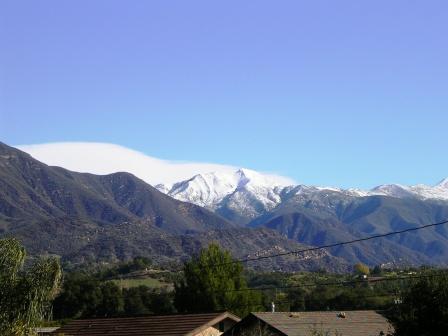
THE BEAUTY OF OJAI, CALIFORNIA
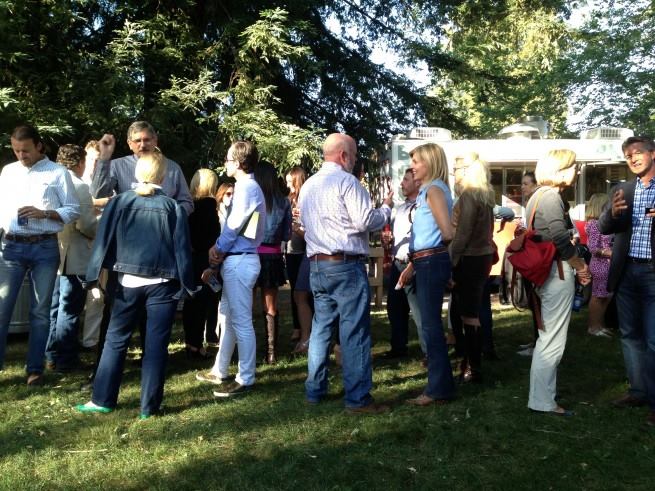
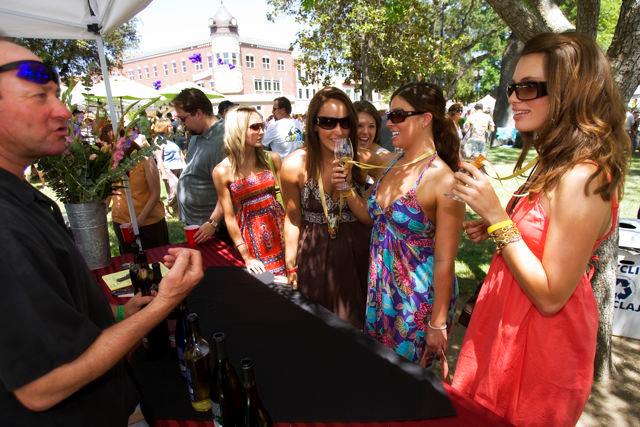
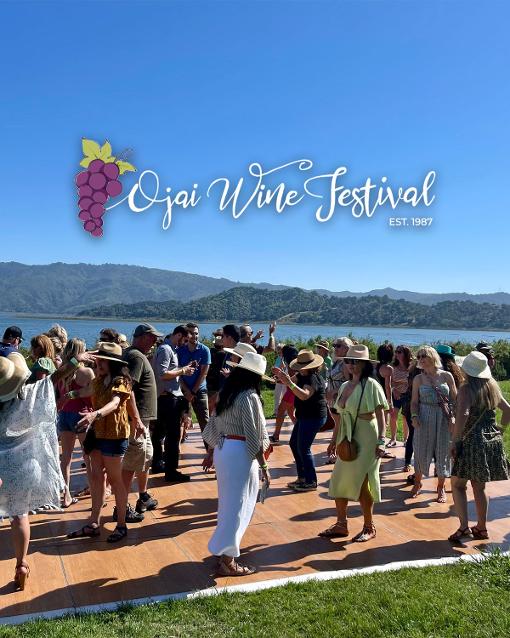
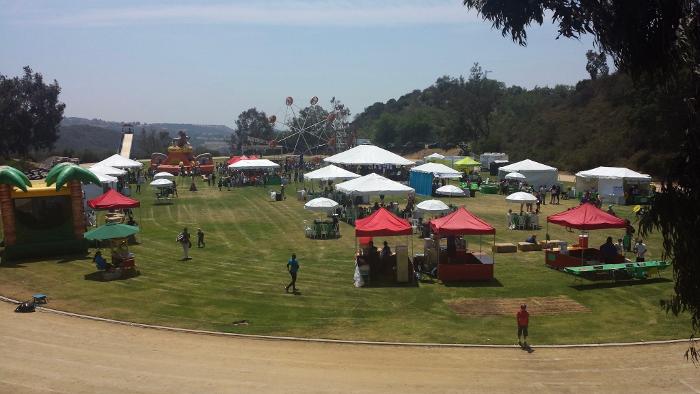
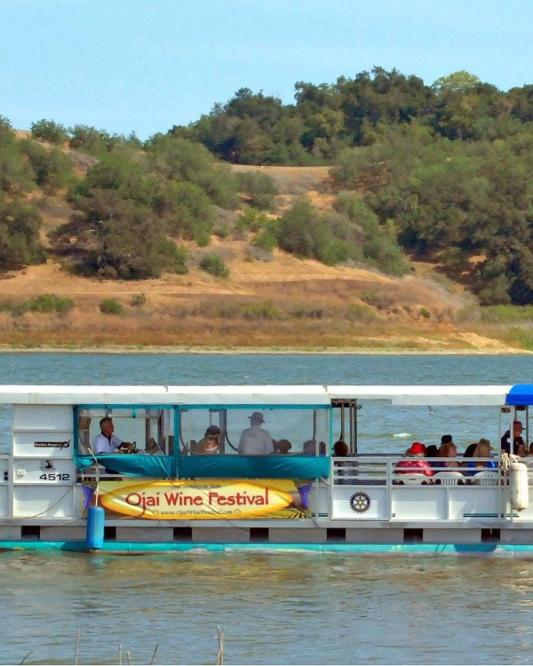


"JACKIE" our Sommelier
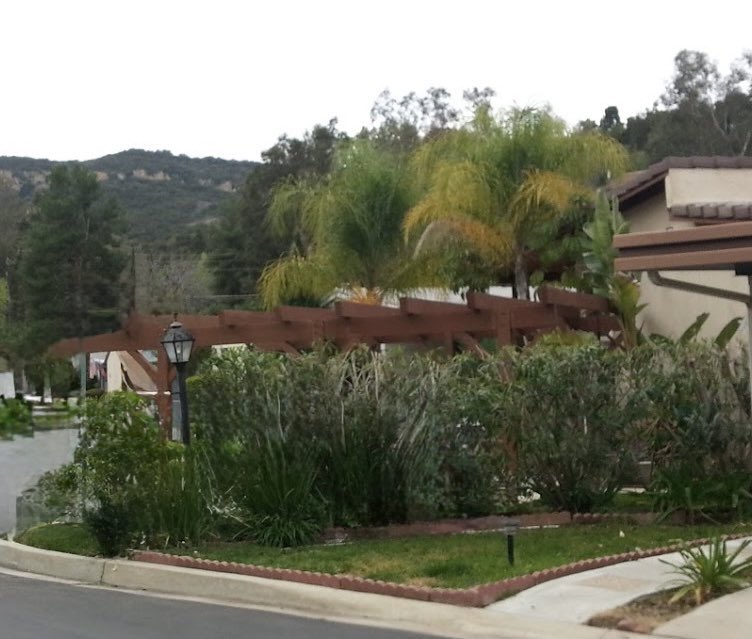
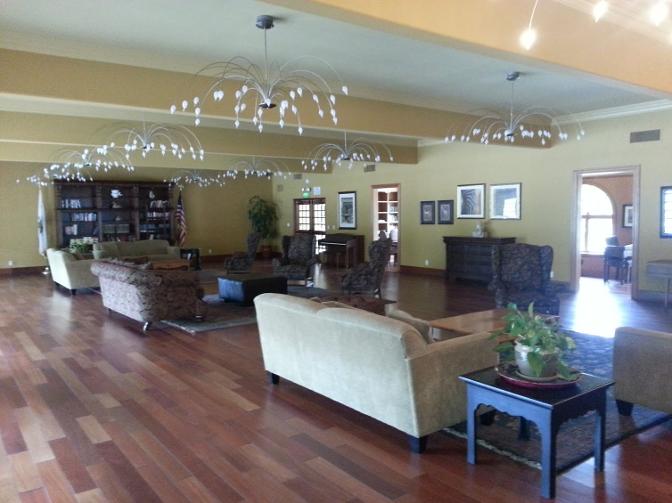
BANQUET AND WINE TASTING ROOM
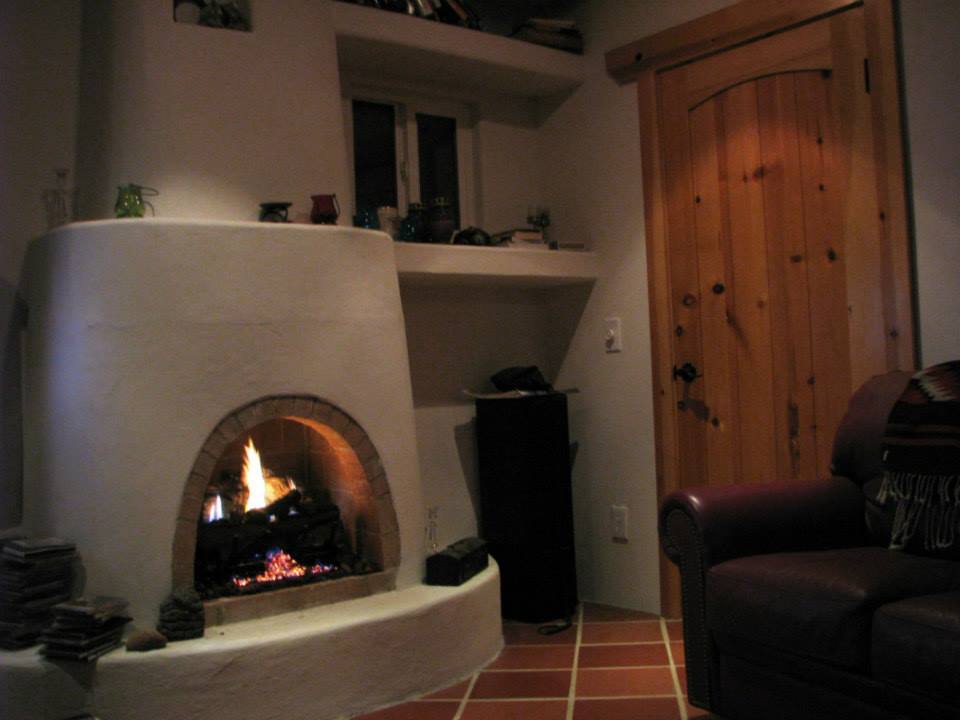
Wine tasting offers value in a variety of ways, ranging from personal enjoyment and education to contributing to the broader economy.
1. Personal & Sensory Experience:
- Palate Development: Tasting different wines helps develop your palate and learn to identify distinct flavors, aromas, and characteristics.
- Discovery of Preferences: Wine tasting allows you to explore various grape varietals and styles, helping you discover what you enjoy most.
- Sensory Engagement: It's an immersive experience that engages sight, smell, taste, and even touch and sound.
- Learning and Education: Wine tasting provides insights into the winemaking process, grape varietals, and food pairings, deepening your appreciation for wine.
- Social & Experiential Value:
- Socialization: Wine tastings are great opportunities to connect with friends, family, and other wine enthusiasts, creating shared experiences and fostering new connections.
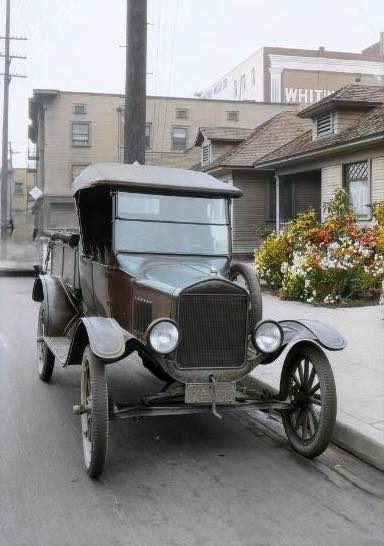
THE FIRST TRUCK PURCHASED 1946